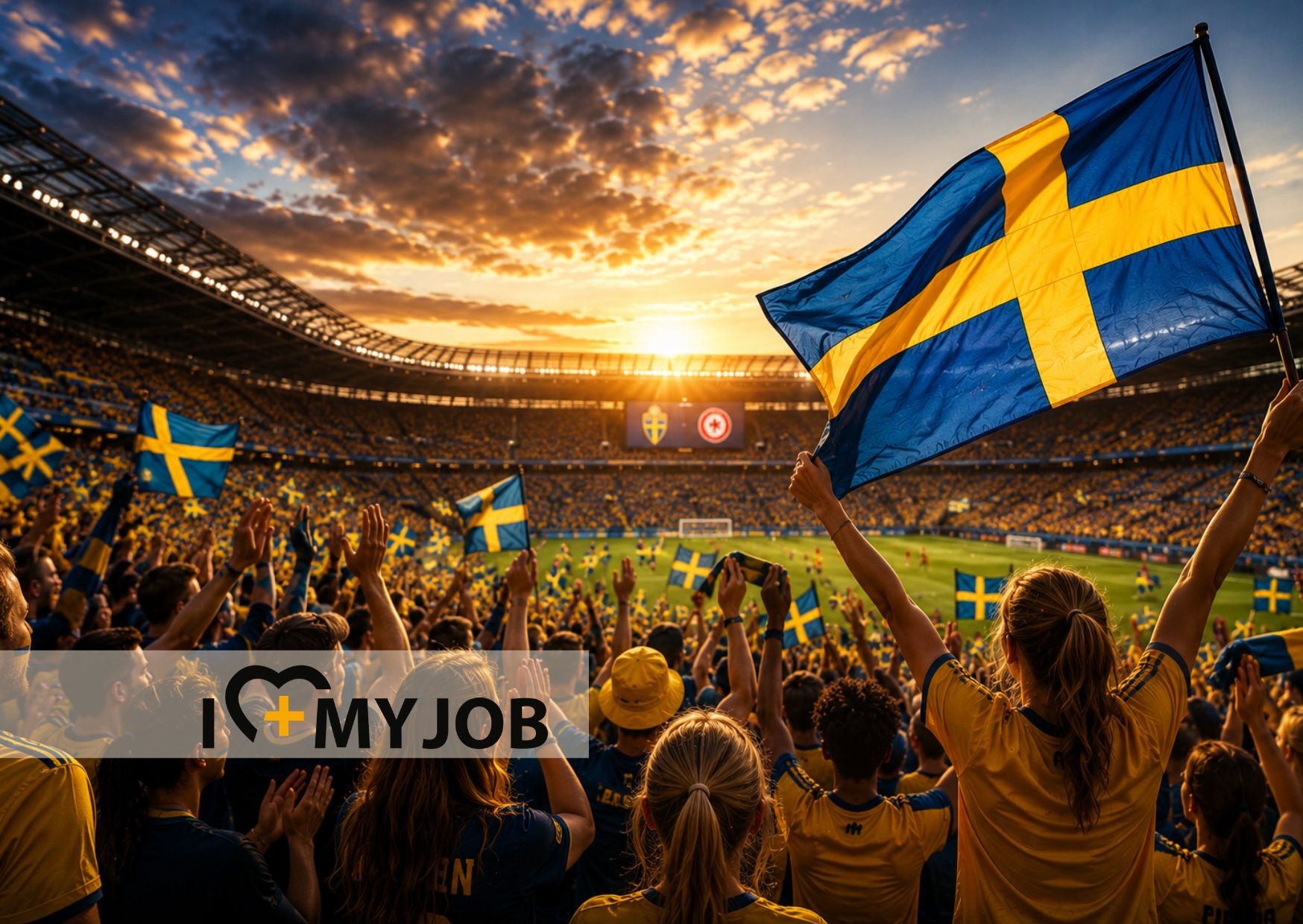
Sweden’s convincing 5–1 victory over Tunisia in their World Cup opener was about more than just three important points. It served as a reminder of what can happen when individuals with different strengths, experiences, and backgrounds come together around a shared goal.
But the World Cup is about more than what happens on the pitch.
When Sweden plays, people across the country become engaged. Workplaces gather around TV screens, conversations continue by the coffee machine, and colleagues who might not normally interact share excitement, anticipation, and joy together. The FIFA World Cup becomes a national celebration that brings people together regardless of age, profession, or background.
This sense of community should not be underestimated. When people feel connected, included, and proud to be part of something bigger than themselves, both motivation and engagement increase. The same principle applies in the workplace as it does on the football field.
When Sweden steps onto the pitch at the World Cup, they represent more than just a national team. They also represent the power of people with different backgrounds, experiences, personalities, and perspectives uniting around a common goal.
It is a reminder that extends far beyond the football stadiums.
The strength lies in our differences
Sweden’s national team reflects modern Sweden. The players come from different backgrounds, have grown up in different environments, and each carry their own unique story. What unites them is not their similarities, but their shared ambition and determination to succeed together.
It is precisely this diversity that creates strength. Different perspectives lead to better decision-making, greater creativity, and an enhanced ability to navigate complex situations. Research consistently shows that teams with a broader mix of experiences and backgrounds often outperform more homogeneous groups.
However, diversity alone does not create success.
Just as in Sweden’s World Cup opener, something more is required.
The culture that makes the team work
A 5–1 victory is not built on individual performances alone. It is built on relationships, communication, and trust. When players trust one another, they are more willing to take initiative, support each other, and act as a unified team—even when the pace and pressure increase.
The same applies in the workplace.
A strong culture is not defined by inspirational words on a wall. It is reflected in everyday actions:
- How we treat one another
- How we handle setbacks
- How we collaborate when results are not meeting expectations
- How safe and supported people feel at work
Just like in the national team, it is often culture that determines whether potential is transformed into performance.
Leadership is about helping people grow
The best national team coaches do not build success by controlling every detail. They create direction, trust, and clear frameworks that enable players to perform at their highest level.
The same is true for modern leaders. In a world where the pace of change is greater than ever, leaders need to create clarity and purpose rather than control. Employees want to understand the “why,” feel trusted, and know that their contributions matter.
Great leadership is therefore not about having all the answers. It is about bringing out the best in others.
A shared goal brings people together
When Sweden faced Tunisia, it did not matter who scored the goals or who delivered the decisive pass. What mattered was that the team succeeded together.
The same principle applies in the workplace. When people understand the organization’s purpose and feel that their contributions are part of something bigger, engagement grows. Collaboration becomes stronger, motivation increases, and results improve.
It is not our differences that divide teams. It is the absence of a shared goal.
The final whistle
Sweden’s strong World Cup start demonstrates that success is rarely about assembling the most talented individuals. It is about creating the right conditions for people to perform together.
When we build workplaces where diverse perspectives are valued, where culture is rooted in trust, and where leadership helps people grow, we create our own winning teams.
Just as in the World Cup, the strongest performances emerge when people feel a sense of belonging, inclusion, and confidence that together they can achieve something greater than themselves.
On the pitch. In the office. And in the future of work.